侠客行
US cyberattack push risks fueling 'privateer-style' cyber piracy, disrupts global cyberspace order, expert warns_我的网站

A | Colombo, Oct 17 (UNI) Sri Lanka saw its earnings from the tourism trade fall in September for a second consecutive month due to weaker arrivals ahead of a more prospective season which has got underway from the start of October and ends in January.
According to the data available through September, tourism trade has brought in $ 53.6 million in foreign exchange, bringing the cumulative nine-month earnings to $ 946.4 million, the Daily Mirror reported on Monday.
The September earnings were lower than both July and August when the figures for those two months were $ 85.1 million and $ 67.9 million respectively.
In the same month a year earlier, the trade had earnings of $ 35.3 million from 13, 547 visitors when the country was under lockdowns, the newspaper said.
In this September, 29,802 tourists travelled to Sri Lanka which was below 37, 760 arrivals in August and 47,293 arrivals in July.
Sri Lanka’s monthly arrivals exceeded 100,000 through March as the country got off to a fine start to tourism with high hopes of the foreign exchange it could generate in 2022, after two years of near decimation of the industry due to the pandemic, the report said.
In the nine months, Sri Lanka has welcomed 526,232 visitors as tourists.
With the start of the winter season in Europe, Sri Lanka is looking at a possible increase in bookings, specially from countries such as Germany and Switzerland.
UNI MR。
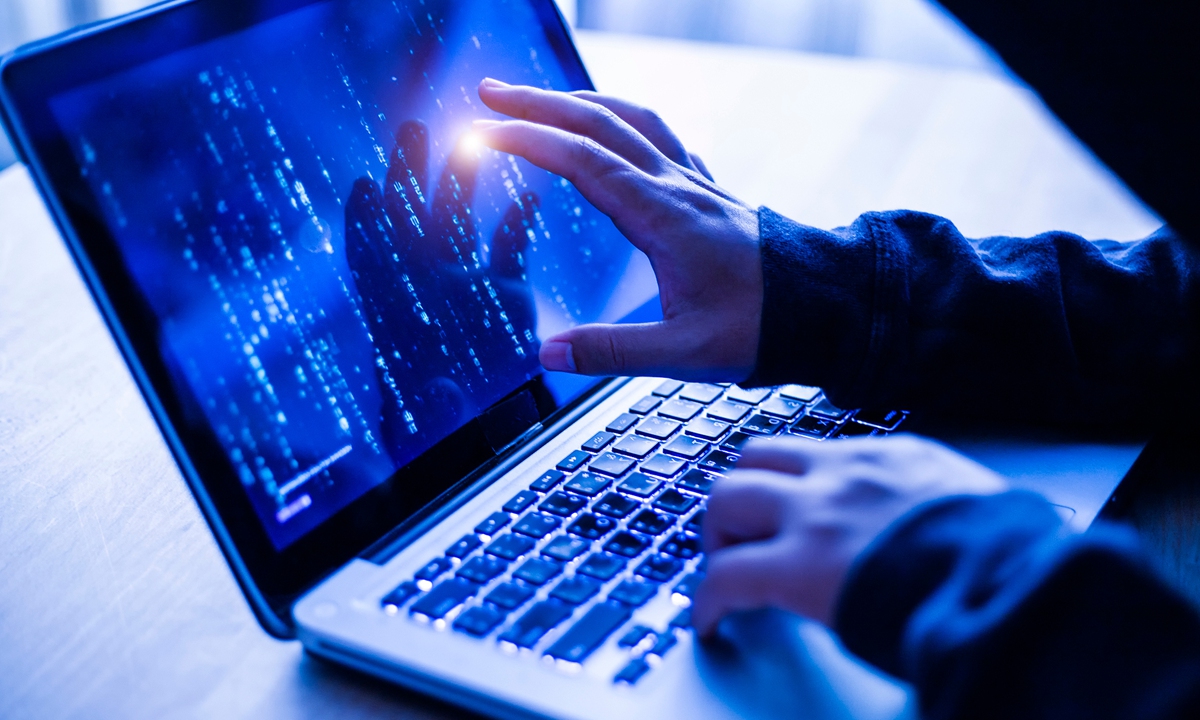
The US government is encouraging American companies to launch their own cyberattacks against criminal hackers, a move that certain US media claimed would bring the US closer to the practices of some of its chief cyber adversaries, including China and Russia. A Chinese expert slammed the claim as factually unfounded, saying that the US move would seriously disrupt the global cyberspace order. Washington has long projected its own conduct onto other countries, inventing adversaries to justify the militarization of cyberspace, the weaponization of artificial intelligence (AI) and even a privateer-style model of cyber piracy, said the expert.
Under a national security memorandum that US President Donald Trump signed late Wednesday, select companies would work with the Justice and Homeland Security Departments to strike foreign cybercriminal groups with hacks under certain conditions. The attacks would allow both surveillance of the criminal networks and specific types of hacking operations that could lead to disruption, manipulation or destruction of information systems and networks, including virtual and physical infrastructure, according to a report from the New York Times.
A CNN report called the move "a major policy shift that experts say could come with legal risk for the companies." It also noted that "companies can use cyber tools to surveil foreign criminals and disrupt their networks under the 'control and oversight' of the new federal program."
The US move is an attempt, under the guise of combating cybercrime, to accelerate its plan to issue "cyber privateering licenses" to private entities. Its core objective is to exploit its advantages in the cybersecurity and intelligence sectors and rapidly turn AI-enhanced cyberattack capabilities into tools for securing strategic interests and undermining the security of other nations, Xiao Xinguang, chief software architect from Chinese cybersecurity company Antiy, told the Global Times on Friday.
Analysts noted that some US media outlets routinely drag China into the frame and slander it whenever Washington unveils relevant policies, all to manufacture pretexts to legitimize America's own policies.
The New York Times report claimed that "to some extent, the new order would align the US more with some of its chief cyberantagonists, including China and Russia, where spy agencies have long relied on contract hackers working in the private sector to further their national security missions."
Xiao noted that the US has long projected its own practices onto other countries, manufacturing imaginary adversaries as scapegoats and falsely attributing to China the operational models of its own intelligence agencies, contractor networks and revolving-door system. By applying double standards and leveling unfounded accusations, Washington creates pretexts for militarizing cyberspace, weaponizing AI and even developing a cyber-privateering model.
In reality, certain US corporations have long supported US intelligence agencies in intelligence collection and offensive cyber operations, and this has been an established practice for years, Xiao said.
"Now, the US is bringing these previously covert practices into the open. As the trend develops, more US cybersecurity firms and intelligence contractors could operate under so-called privateering authorizations, posing as non-state actors while carrying out intrusions, data theft, sabotage and other disruptive cyberattacks against countries around the world," said Xiao.
。

B |
Current article:http://o3vsi.chuandanfozhuanbenglipaicuzi.pics/d5ls6/ad68.html
Published on:22:56:24
 昼颜
昼颜 西门无恨
西门无恨 nba
nba 龙之战
龙之战 复仇者联盟2
 一米阳光
一米阳光 妖女迷行
妖女迷行 性爱大师
性爱大师


